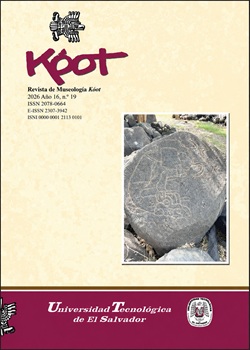
Pilgrimage and hybridization in Mesoamerica: the case of the Lempa River and Lake Güija
Keywords:
Christianity, Christian pilgrimages, Religious processions, Human sacrifices, El Salvador - Historic cities, Sacred sites, Lakes (in religion, folklore, etc.)Abstract
This article explores the role of the Lempa River and Lake Güija as key nodes of pilgrimage and cultural hybridization in Mesoamerica. By analyzing archaeological, ethnohistorical, and iconographic evidence, it argues that these water bodies served as sacred landscapes where diverse Mesoamerican groups, including the Maya, Nahua Pipil, and Xinca, engaged in pilgrimage, ritual activities, trade, and ideological exchange. The study highlights the interplay between pilgrimage, material culture, and cross cultural interactions in shaping religious hybridization and sociopolitical dynamics, which started during the colonial period and persist until the 21st century.
89
Downloads
Published
How to Cite
Issue
Section
License
Copyright (c) 2026 Universidad Tecnológica de El Salvador

This work is licensed under a Creative Commons Attribution-NonCommercial-ShareAlike 4.0 International License.

