
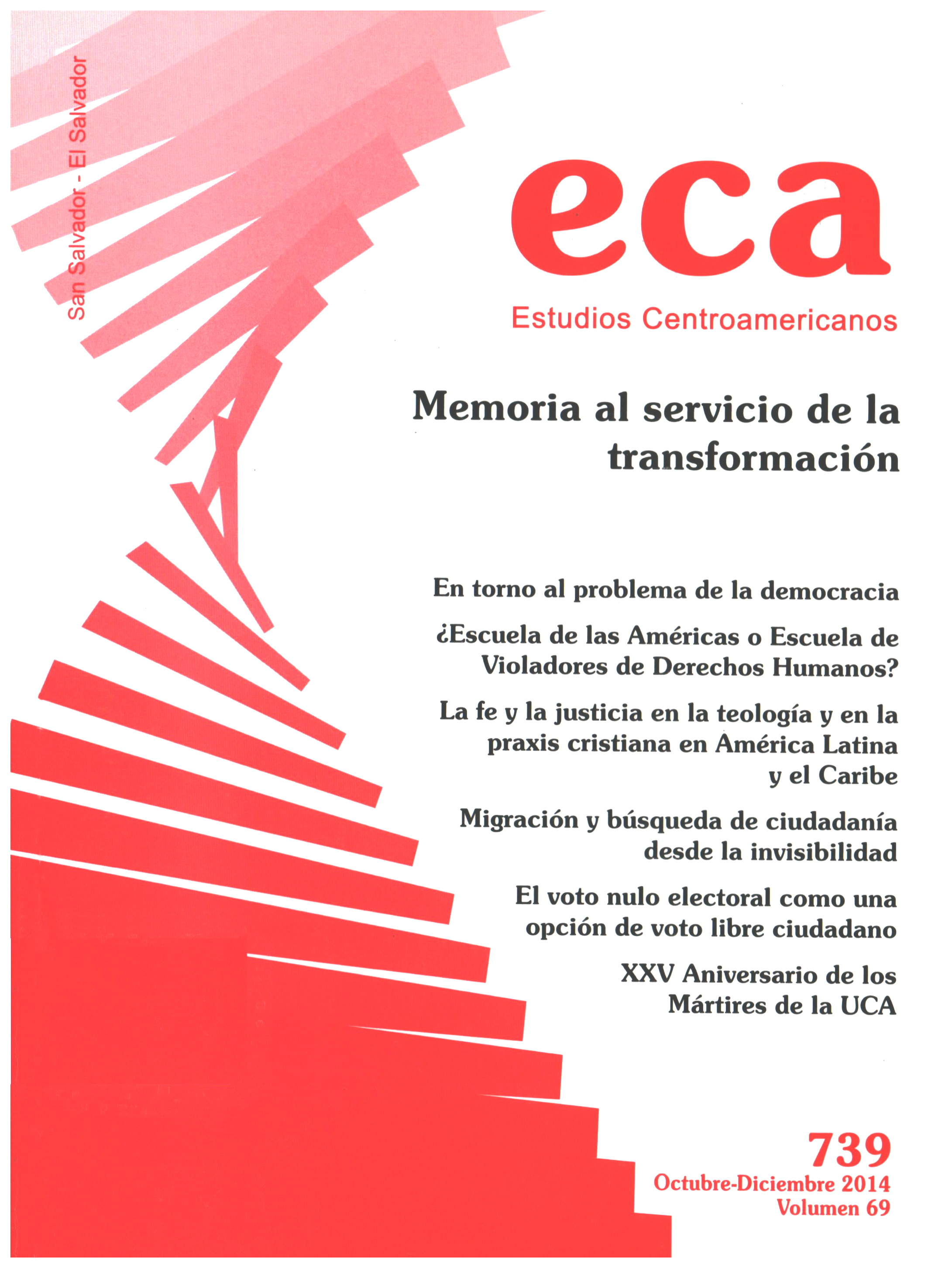
The faith and justice in theology and in praxis Christian in Latin America and the Caribbean
Keywords:
Development models, Dictatorship, Second Vatican Council, Liberation theology, Second Medellín ConferenceAbstract
This essay examines how the synthesis of faith and justice that took shape at the Second Vatican Council has been reinterpreted in Latin America and the Caribbean. This process found expression in Christian theology and practice beginning with the Second Conference of the Latin American Bishops in Medellín in 1968. In Latin America and the Caribbean, this change was driven by the following factors:
1. The failure of development and economic growth models, which bolstered the proposal of revolutionary popular movements offering a just and equitable society.
2. Prolonged military dictatorships, de facto governments, coups d’état, and the counterproposal to build a democratic, representative society that respected citizens’ rights and the institutional framework of the state.
3. The shift that occurred in the Church with the Second Vatican Council, the change in ecclesiology from a vision of a perfect society to a conception of the Church as the people of God, engaged in dialogue with modernity and willing to take on the challenges posed by the modern, enlightened, scientific, and developed world.
4. The implementation of the Second Vatican Council at the Episcopal Conferences of Medellín (August 24–September 6, 1968), Puebla (January 27–February 12, 1979), Santo Domingo (October 12–28, 1992), and Aparecida (May 13–31, 2007).
5. The impetus of theologians who made the shift from traditional theology to a progressive and liberating theology in that context, which took shape after the Second Episcopal Conference of Medellín held in 1968.
We will now begin to explore the aspects mentioned above, but it is important to note that there are topics we will address in future reflections.
4
Downloads
Published
How to Cite
Issue
Section
License

This work is licensed under a Creative Commons Attribution-NonCommercial-NoDerivatives 4.0 International License.
© ECA. Estudios Centroamericanos está bajo una licencia Creative Commons NonCommercial-NoDerivatives 4.0 International (CC BY-NC-ND 4.0).

La licencia no comercial y sin obra derivada permite la reproducción, distribución y comunicación pública, pero no la posibilidad de comercializar su contenido ni tampoco generar una obra derivada, como una traducción o adaptación, excepto que se pida permiso a los editores de dicha obra.
En ese sentido, se está en la libertad de:
Compartir: copiar y redistribuir el material en cualquier medio o formato.
Bajo las siguientes condiciones:
- Reconocimiento: se debe dar crédito a esta obra de manera adecuada, proporcionando un enlace a la licencia, e indicando si se han realizado cambios.
- Uso no comercial: no se puede hacer uso del material con fines comerciales.
- Sin obra derivada: si se remezcla, transforma o construye sobre ese material, no se puede distribuir el material modificado.

