
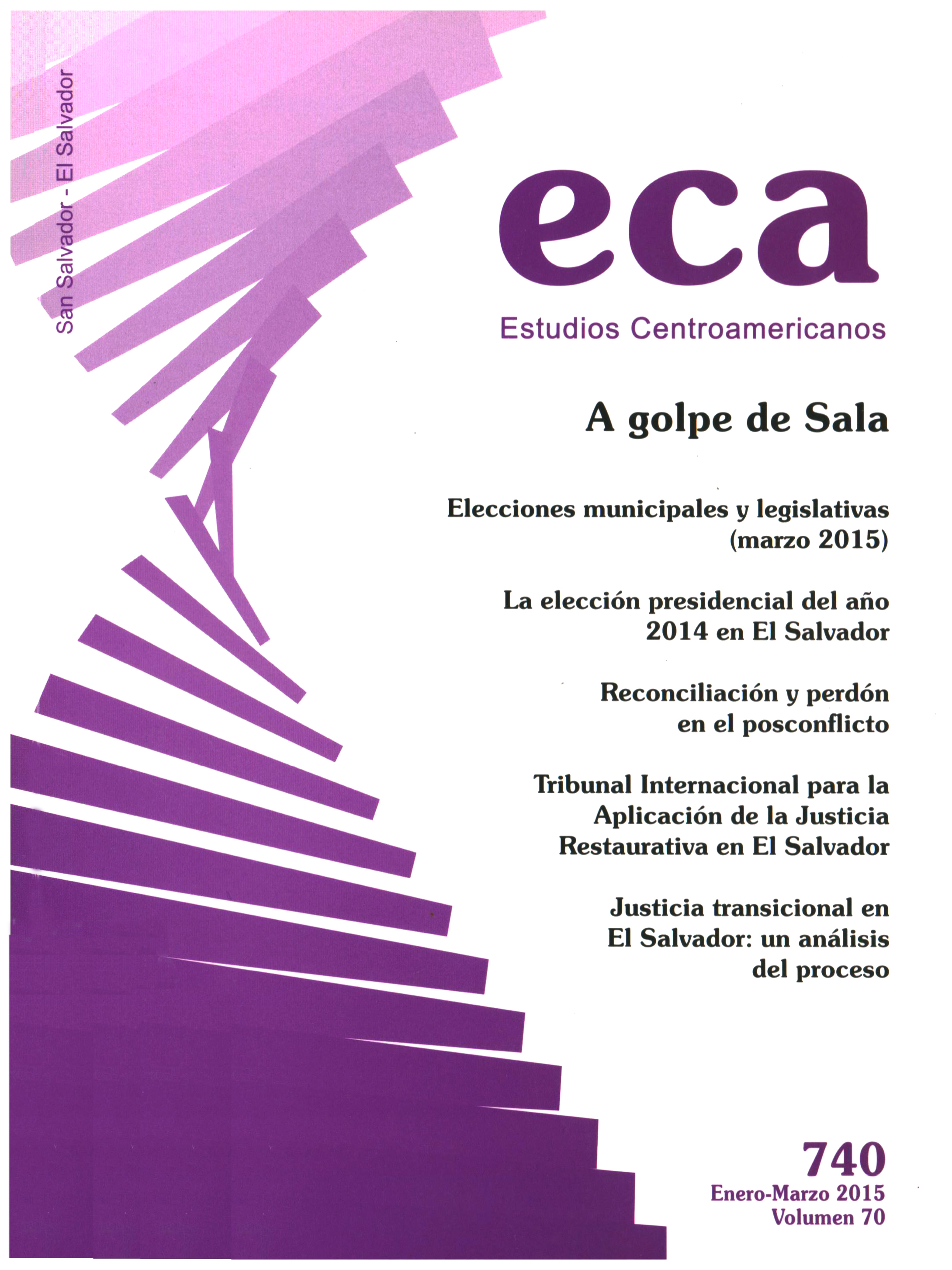
Recalibrating the look at the past: reconciliation and forgiveness in the post-conflict
DOI:
https://doi.org/10.51378/eca.v70i740.3209Keywords:
Historical memory, Reconciliation, Culture of peace, Sociopolitical violenceAbstract
The article examines two dynamics associated with the restoration of the social fabric following an armed conflict, conceptualizing them as spheres of meaning that shape identity and underpin attitudes and actions. The first relates to the psychosocial processes associated with accountability for deliberately inflicted suffering and the reconciliation required once the armed conflict ends; the second relates to those linked to repentance and forgiveness. Both processes are mutually intertwined in the necessary examination of a past filled with horror and are connected through the impact on conscience, understanding, memory, ethical stance, and the reframing of interpersonal and intergroup relationships. The article examines certain fundamental political and social conditions for building a culture of peace and compares the social frameworks of two cultures: the culture of violence and the culture of peace.
1
References
Amstutz, M., R. (2004). The healing of nations. The promise and limits of political forgiveness. Lanham: Rowman & Littlefied.
Arendt, H. (1958/2005). La condición humana. Barcelona: Paidós Ibérica.
Arendt, H. (1963/2004). Sobre la revolución. Madrid: Alianza.
Bagnulo A., Muñoz-Sastre, M.T. y Mullet, E. (2009). Concepciones de perdón: una comparación entre Latinoamérica y Europa Occidental. Universitas Psychologica, 8(3), 673-682.
Bar-Tal, D. (2001). Why does fear override hope in societies engulfed by intractable conflict, as it does in the Israeli society. Political Psychology, 22(3), 601-627.
Bar-Tal, D., Halperin, E., y de Rivera, J. (2007). Collective emotions in conflict situations: Social implications. Journal of Social Issues, 63, 441-460.
Bar-Tal, D., Rosen, Y., y Nets Zehngut (2011). Educación para la paz en las sociedades implicadas en conflictos prolongados y resistentes a su resolución: objetivos, condiciones y direcciones. En D. Páez Rovira, C. Martín Beristain, J. L. González-Castro, N. Basabe Barañano y J. de Rivera (eds.). Superando la violencia colectiva y construyendo la paz (pp. 496-535). Madrid: Fundamentos.
Baumeister R. F., y Butz, D. Roots of evil and roots of hate. En R. J. Sternberg (Comp.), The psychology of hate. Washington, D.C.: American Psychological Association.
Baumeister, R. F., y Campbell, W. (1999). The intrinsic appeal of evil: sadism, sensational thrill and threatened egotism. Personality and Social Psychology Review, 3(3), 210-221.
Baumestier, R. F., Stillwell, A. M., y Heatherton, T.F. (1994). Guilt: an interpersonal approach. Psychological Bulletin, 115(2), 243-267.
Bergson, (1996). Las dos fuentes de la moral y de la religión. Madrid: Tecnos.
Bodenhausen, G. V., Moreno, V. K. (2000). How do I fell about them? The role of affective reactions in intergroup perceptions. En J. P. Forgas (Comp.), The message within: The role of subjective experience in social cognition and behavior. Filadelfia: Psychology Press.
Böhmer, M. (2014). Puede ser que no haya una sola respuesta correcta. En C. Hilb, P-J Salazar, y L G. Martín (eds.). Lesa humanidad. Argentina y Sudáfirca: Reflexiones después del mal (119-137). Buenos Aires: Katz.
Bonerman, J. (2002). Reconciliation after ethnic cleansing: Listening, retribution, affiliation. Public Culture, 14, 281-304.
Branscombe, N. B., y Doosje, B. (2004). Collective guilt: International perspectives. Cambridge: Cambridge University Press.
Castillejo, A. (2009). Los archivos del dolor. Ensayos sobre la violencia y el recuerdo en la Sudáfrica contemporánea. Bogotá: Uniandes.
Cotrell, C. A., y Neuberg, S. L. Different emotional emotional reactions to different groups: A sociofunctional threatbased approach to prejudice. Journal of Personality and Social Psychology, 88 (5), 770-789.
Digiser, P. (2001). Political forgiveness. Ithaca: Cornell University Press.
Doosje, B., Branscombe, N. B., Spear R., Manstead, A. S. R. (1998). Guilt by association: When one´s group has a negative history. Journal of Personality and Social Psychology, 75(4), 872-886.
Etxeberria, I., Conejero, S. y Pascual, A. (2011). La culpa colectiva en contextos de violencia política. En D. Páez Rovira, C. Martín Beristain, J. L. González-Castro, N. Basabe Barañano y J. de Rivera (Eds.). Superando la violencia colectiva y construyendo la paz (pp. 39-69). Madrid: Fundamentos.
Gaborit, M. (2007). Recordar para vivir: el papel de la memoria histórica en la reparación del tejido social. Estudios Centroamericanos (ECA), número 701-702, volumen 62, 203-218.
Gamboa Tapias, C. (2004). Perdón y reconciliación política: dos medidas restaurativas para enfrentar el pasado. Revista de Estudios Socio-Jurídicos, 6(1), 81-110.
Gamboa Tapias, C. (2006). Justicia transicional: teoría y praxis. Bogotá: Editorial Universidad del Rosario.
Gaskell, G. D., y Wright, D. B. (1997). Group differences in memory for a political event. En J. W. Pennebaker, D. Páez, y B. Rimé (eds.). Collective memory of political events (pp.203-218). Washington, D.C.: Psychology Press.
Hamber, B. (2007). Forgiveness and reconciliation: Paradise lost or pragmatism. Peace Review, 13(1), 115-125.
Hayner, P. B. (2002). Unspeakable truths: Facing the challenges of Truth Commissions. Nueva York: Routledge.
Hilb, C. (2014). Justicia, reconciliación, perdón. ¿Cómo fundar una comunidad después del crimen? En C. Hilb, P-J Salazar, y L G. Martín (Eds.). Lesa humanidad. Argentina y Sudáfirca: Reflexiones después del mal (52-74). Buenos Aires: Katz.
Hiriart, H. (2012). A través del espejo. La contrición en Bergson. Nueva Época. Revista de la Universidad de México, 104, 493.
Kaufman, S. J. (2001). Modern hatred: the symbolic politics of ethnic wars. Ithaca: Cornell University Press.
Kitayama, S., y Markus, H. R. (eds.). (1994). Introduction to cultural psychology and emotion research. En S. Kitayama y H. R. Markus, Emotion and culture: Empirical studies of mutual influence (pp. 1-19). Washington, DC: American Psychological Association Press.
Lévinas, E. (1991). Ética e infinito. Madrid: Visor.
Maoz, I. (2004). Coexistence is the in eye of the beholder: Evaluating intergroup encounter interventions between Jews and Arabs in Israel. Journal of Social Issues, 60 (2), 437-452.
Markus, H. R., y Kitayama, S. (1994). The cultural construction of self and emotion: Implications for social behavior. En S. Kitayama y H. R. Markus, Emotion and culture: Empirical studies of mutual influence (pp. 89-130). Washington, DC: American Psychological Association Press.
Martín-Baró, I. (1983). Acción e ideología. Psicología social desde Centroamérica. San Salvador: UCA Editores
Martin, L. G. (2014). Regímenes criminales, refundaciones democráticas y formas de justicias (Argentina, Sudáfrica, Uruguay). En C. Hilb, P-J Salazar, y L G. Martín (Eds.). Lesa humanidad. Argentina y Sudáfrica: Reflexiones después del mal (161-180). Buenos Aires: Katz.
Mínguez Vallejo, R. (2012). La responsabilidad educativa en tiempos de crisis. Edetania: Estudios y Propuestas Socio-educativas, 42, 107-125.
Molina Rueda, B., y Muñoz Muñoz, F. A. (2004). Manual de paz y conflictos. Granada: Universidad de Granada.
Montiel, C. J. (2000). Constructive and destructive post-conflict forgiveness. Peace Review, 12(1), 95.101
Mullet, E., Pinto, M., Nann, S., Kadima Kadiangandu, J., Neto, F. (2011). Hacia una política positiva: el caso del perdón en el contexto intergrupal en Asia y África. En D. Páez Rovira, C. Martín Beristain, J. L. González-Castro, N. Basabe Barañano y J. de Rivera (Eds.). Superando la violencia colectiva y construyendo la paz (pp. 375-397). Madrid: Fundamentos.
Neto, F., Mullet, E., Chiaramello, S., Suwartono, C. (2013). Petición de perdón: estructura factorial en muestras de América Latina, África, Asia y Europa del Sur. Universitas Psychologica, 12(3), 663-669.
Otto, R. (1965). Lo santo, lo racional y lo irracional en la idea de Dios. Madrid: Revista de Occidente.
Otto, R. (2009). Ensayo sobre lo numinoso. Madrid: Trotta.
Rettberg, A. (2013). La construcción de paz bajo la lupa: Una revisión de la actividad de la literatura académica internacional. Estudios
Políticos, 42, 13-36.
Romero Sánchez, E., Pérez Molina, C. (2012). Aproximaciones al concepto de responsabilidad en Lévinas: implicaciones educativas. Bordón, 64(4), 99-110.
Salazar, P.J. (2014). La reconciliación como modo de vida ética de la república. En C. Hilb, P-J Salazar, y L G. Martín (Eds.). Lesa humanidad. Argentina y Sudáfrica: Reflexiones después del mal (101-118). Buenos Aires: Katz.
Sen, A. (2007). Identidad y violencia: La ilusión del destino. Bueno Aires: Katz Editores. Sen, A. (2010). La idea de la justicia. Madrid: Taurus.
Shriver, D. W. (1995). An ethics for enemies: Forgiveness in politics. Nueva York: Oxford University Press.
Staub, E. (2006). Reconciliation after genocide, mass killing and intractable conflict: Understanding the roots of violence, psychological recovery, and steps towards a general theory. Political Psychology, 27 (6), 867-894.
Sternberg, R. J., y Sternberg, K. (2010). La naturaleza del odio. Madrid: Paidós.
Tam, R., Hewstone, M., Kenworthy, J.G., Cairns, E., Marinetti C., Geddes, L. y Parkinson B. (2008). Postconflict reconciliation: Intergroup forgiveness and implicit biases in Northern Ireland. Journal of Social Issues, 64(2), 303-320.
Tavuchis, N. (1991). Mea culpa: A sociology of apology and reconciliation. Palo Alto, CA: Stanford University Press.
Vargas Bejarano, J. C. (2008). Reconciliación como perdón. Una aproximación a partir de Hannah Arendt. Praxis Filosófica 26, 111-129.
Worthington, E. L (Ed.). (2005). Handbook of forgiveness. Nueva York: Routledge.
Downloads
Published
How to Cite
Issue
Section
License

This work is licensed under a Creative Commons Attribution-NonCommercial-NoDerivatives 4.0 International License.
© ECA. Estudios Centroamericanos está bajo una licencia Creative Commons NonCommercial-NoDerivatives 4.0 International (CC BY-NC-ND 4.0).

La licencia no comercial y sin obra derivada permite la reproducción, distribución y comunicación pública, pero no la posibilidad de comercializar su contenido ni tampoco generar una obra derivada, como una traducción o adaptación, excepto que se pida permiso a los editores de dicha obra.
En ese sentido, se está en la libertad de:
Compartir: copiar y redistribuir el material en cualquier medio o formato.
Bajo las siguientes condiciones:
- Reconocimiento: se debe dar crédito a esta obra de manera adecuada, proporcionando un enlace a la licencia, e indicando si se han realizado cambios.
- Uso no comercial: no se puede hacer uso del material con fines comerciales.
- Sin obra derivada: si se remezcla, transforma o construye sobre ese material, no se puede distribuir el material modificado.

